
Careful pruning that respects your trees and your property.
Tree pruning on the South Shore
Tree pruning on the South Shore helps homeowners and property managers maintain their trees while addressing branches that interfere with buildings and outdoor spaces. ÉMONDEXPERT assesses each tree before recommending the work.
Our certified arborists are members of the Société internationale d’arboriculture (SIAQ) and the International Society of Arboriculture (ISA).
We carry out work suited to the trees and their surroundings, in compliance with CNESST safety requirements. We carry liability insurance with Intact.
Our pruning service is intended for residential and commercial property owners who want to maintain their trees, as well as managers of institutional or industrial buildings and grounds who need to keep outdoor spaces safe and functional.
Any questions? (450) 577-0220
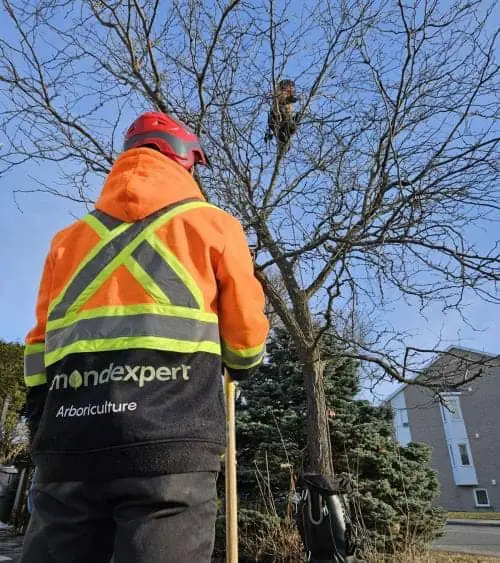
Tree pruning services on the South Shore
A tree does not grow in isolation. It develops according to the available space, light, soil type and presence of other trees and plants.
Whether on a residential or commercial property, its growth can eventually cause problems. A branch may extend into a driveway, rub against a wall or reach power lines.
Our pruning service begins with an assessment of the tree and the site. Our goal is to understand the problems before choosing the pruning method to use.
For example, pruning a young tree is not planned in the same way as pruning a mature tree. And a dead branch does not necessarily require the same approach as a healthy branch growing close to a building.
Our tree pruners assess the needs of each situation and determine which cuts to prioritize.
Depending on their observations, the work may involve removing dead or damaged branches, reducing encroachment on infrastructure or improving the distribution of branches within the crown.
Each project is assessed based on the tree, its location and the intended objectives.
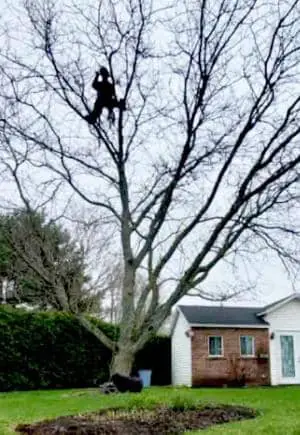
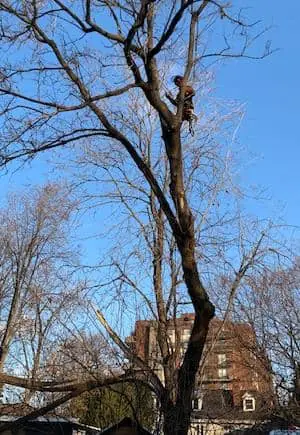
Other ÉMONDEXPERT services
Some problems cannot be resolved through pruning alone. That is why the ÉMONDEXPERT team offers several complementary services:
tree pruning
We cut large branches according to the specific needs of the tree and the owner (branches that are broken, dead or extending over buildings).
Tree cabling
We provide strong support for certain large branches using a cable system, avoiding cuts that would harm the trees.
Tree removal
We cut the branches and trunks of trees that cannot safely be retained, or when a tree is dead or very diseased.
Stump grinding
After removing a tree, our team grinds the stump, then lays sod or replants a tree as needed. We use our grinder to remove the stump!
Tree planting
Our arborists plant trees and hedges, adding compost and the necessary soil amendments. Structural pruning is carried out the following year.
Hedge trimming
Our team maintains cedar hedges (and other types of hedges) to control their growth, cut dead branches and improve their appearance.
Branch chipping
After our tree pruning, trimming or removal work, we chip the branches into wood chips, which you can keep or have removed.
Why have your trees pruned?
A well-maintained tree enhances a property’s appearance and creates a pleasant environment. However, its growth must be monitored.
Branches can grow close to buildings, interfere with pedestrian or vehicle traffic, block light or show signs of weakness (risk of falling).
A tree may appear healthy but have problems that are difficult to spot. A large dead branch, a weakened fork or crossing branches may require attention.
Here are the main reasons to prune a tree:
Help young trees grow properly
Young trees can benefit from structural pruning. It establishes an appropriate structure during the first years of growth. The cuts are targeted and must respect the characteristics of the species.
Pruning at the right time can help correct certain defects before they become more difficult to manage. However, overly severe cuts can harm the tree’s development.
Remove dead and weakened branches
A dead branch can break because of wind or the weight of snow or ice. A cracked or damaged branch may also be at risk of falling, even if it is still very much alive and leafy.
Removing them helps reduce the risk of accidents involving people, as well as nearby vehicles, buildings and infrastructure.
The locations of the cuts must be determined to avoid unnecessarily damaging the tree’s tissues. Well-planned work helps preserve healthy parts and limits injury to the tree.
Sanitation pruning aims to remove dead, broken, diseased or damaged branches. It may be recommended after a storm or when a tree shows signs of decline.
This work addresses problematic areas without cutting healthy branches.
Keep branches away from buildings
When a tree grows near a home, its branches may eventually touch the roof, gutters and windows. Branches can also rub against the siding during high winds or extend into a driveway.
Clearance pruning restores a more appropriate distance between the tree and buildings. The work must account for the clearance to be maintained and the branches’ future growth.
The cuts must also be precise enough to resolve the problem without unnecessarily altering the tree’s shape.
If a branch touches a power line or could fall onto a conductor, contact our team rather than trying to remove it yourself.
We recommend that our clients anticipate growth by having structural pruning carried out at regular intervals, rather than waiting until branches are too long.
Maintain a balanced crown
The crown consists of the tree’s branches and foliage. Over time, some branches may cross or grow in directions that harm the tree.
Pruning can then correct certain defects to create a more balanced distribution of branches.
The frequency of the work depends on the tree’s species, age, growth rate and location. Not every tree needs annual pruning. What matters is monitoring their development and intervening as needed.
Let in more sunlight
To bring more light onto a deck or through windows, selective thinning reduces foliage density and helps sunlight reach these areas.
This type of pruning must be carefully planned, because removing too much foliage can weaken the tree and upset its structural balance.
Reduce size
Reduction pruning may be considered when part of the crown extends too far for the space available on the property.
The cuts must be made carefully to avoid mutilating the tree or causing weak regrowth. Our tree pruners determine which cuts to make based on the tree’s structure, species and condition.
Targeted tree pruning and excessive crown removal
The amount of wood and foliage removed should reflect the tree’s needs. More cutting does not automatically deliver a healthier tree or a better result for the property.
Tree pruning involves targeted cuts to maintain the tree, remove certain branches and preserve its structure. It may aim to improve its health, make it safe, provide clearance around buildings or give it a specific shape.
Excessive crown removal can harm the tree’s appearance and health. Any proposed reduction must therefore respect the species, condition and structure of the tree.
Before proceeding, our tree pruners assess whether targeted pruning is sufficient or whether other work should be considered. They will strive to meet your needs while avoiding unnecessary cuts that harm trees.
Contact us if you need tree pruning on the South Shore.
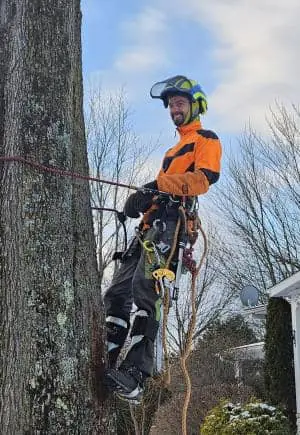
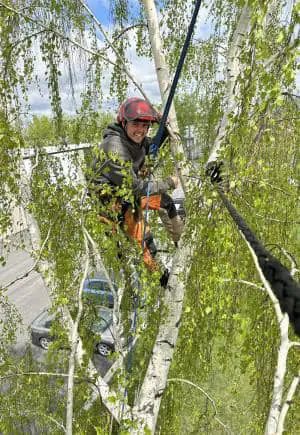
Why choose an experienced tree pruner?
Pruning work can be complex, especially when it involves a mature tree or one located near a building or power lines.
Heavy branches can shift suddenly during cutting and damage the surrounding landscaping if their removal is not properly planned.
A tree pruner must know cutting techniques, understand the tree’s structure and assess the risks associated with each operation. They must also use appropriate equipment and organize the work around the obstacles present on the property.
Our team has more than a decade of experience in residential, commercial, industrial and institutional tree pruning.
We know that the needs of a homeowner who wants clearance around a deck differ from those of a manager responsible for a commercial parking lot or a busy property.
Our work must therefore be planned around the actual constraints of the site.
What does a pruning project involve?
The first step is to examine the tree and its surroundings. This assessment identifies the branches to remove, access constraints and risks that need to be considered.
The proximity of a roof, fence, parking lot or another tree may influence the working method. Once the needs are clearly defined, our team plans the cuts and chooses the equipment to use.
Branches are removed in a controlled manner to limit risks to people and buildings. The cuts must be precise enough to achieve the owner’s objective without unnecessarily removing branches and foliage.
Debris cleanup must also be planned. Depending on the agreed terms, branches can be chipped and the wood chips left with the client or removed.
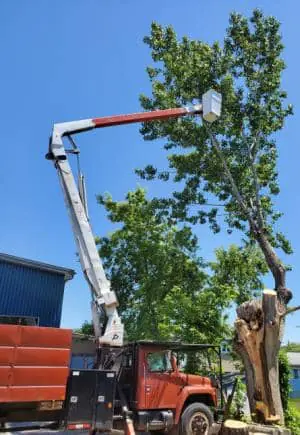
Projects completed on the South Shore
Boulevard Milan
Our team needed to cut branches that were growing close to power lines while preserving the tree’s natural shape and balance.
Our tree pruners selected targeted cuts to remove problematic branches while preserving as much of the tree’s natural structure as possible.
Any work near electrical infrastructure depends on safe clearances and the required authorizations. Hydro-Québec must be consulted to determine the appropriate next steps.
Rue Saint-Charles
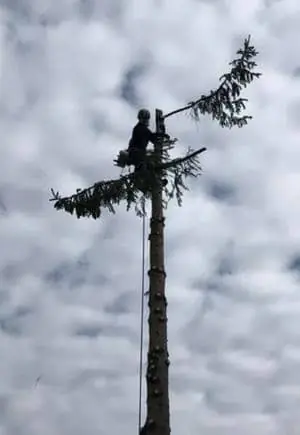
After an ice storm, several branches on our client’s property were broken or weakened by the weight of the ice.
Our pruning work involved removing the damaged branches and making the trees safe while preserving as much of their natural shape as possible.
Each cut was made carefully to avoid removing healthy sections. We also collected fallen branches and cleaned the property.
Planning tree care around your property
Agree on priorities before the work begins
Start by separating immediate concerns from improvements that can be planned for later. Identify broken branches, limbs rubbing against a roof and access routes that have become obstructed. Then describe what you want to retain: shade over a deck, privacy in the yard or the natural outline of a mature tree. Clear objectives help the arborist explain which cuts are useful and which healthy branches should remain.
Access matters as much as the height of the tree. Tell our team about narrow gates, pools, planted beds and busy parking areas. Agree on the spaces that need to be cleared before work starts and the arrangements for protecting the surrounding property. The quote should also clarify debris removal, branch chipping and whether any wood chips will be left for your use.
Observe the tree after pruning
Watch the tree from ground level and report a newly broken branch, a crack or an unexpected change in foliage. Avoid compacting the soil by parking vehicles or storing heavy materials around the trunk. Any follow-up should reflect the tree’s species, growth and condition. Another pruning visit is not automatically needed the following year. If branches are close to electrical infrastructure, stay clear and consult Hydro-Québec before considering further work.
Frequently asked questions about tree pruning
When is the right time to prune a tree?
Timing depends on the tree species, its condition and the reason for pruning. A broken branch that could fall needs prompt assessment, while structural pruning can usually be planned. Tell the arborist about recent storm damage, unusual leaf loss or construction near the roots. These details help establish priorities and choose a suitable approach rather than applying the same schedule to every tree.
How much foliage should be removed?
There is no single percentage that suits all trees. A young, vigorous tree and an older tree under stress have different tolerances. Removing too much live foliage can reduce the energy available for growth and trigger unwanted shoots. The proposed cuts should therefore have a clear purpose. Ask which branches will be retained, what clearance can reasonably be achieved and whether the work should be spread over more than one visit.
What information helps with a free quote?
Provide the property address, the number of trees and a description of the problem. Photos taken from a safe distance can show how branches relate to a roof, fence or driveway. Mention narrow access, parked vehicles and whether you want the wood chips kept or removed. An assessment is still needed to confirm the work method, the proposed cuts and the arrangements for protecting the site.
What should I watch for after the work?
Observe the tree from the ground and report new cracks, hanging branches or unexpected changes in foliage. Keep vehicles and stored materials away from the root zone where possible. Follow any specific aftercare advice given for your tree. A follow-up interval should reflect its species, condition and surroundings; annual pruning is not automatically required. If a branch is near a power line, stay clear and contact Hydro-Québec for guidance.
Request a quote
Contact us to discuss the work you need and get a free quote.
You can call us at (450) 577-0220 or email us at info@emondexpert.com.
Call on our professional team today for your tree pruning work on the South Shore.